Ultrasound
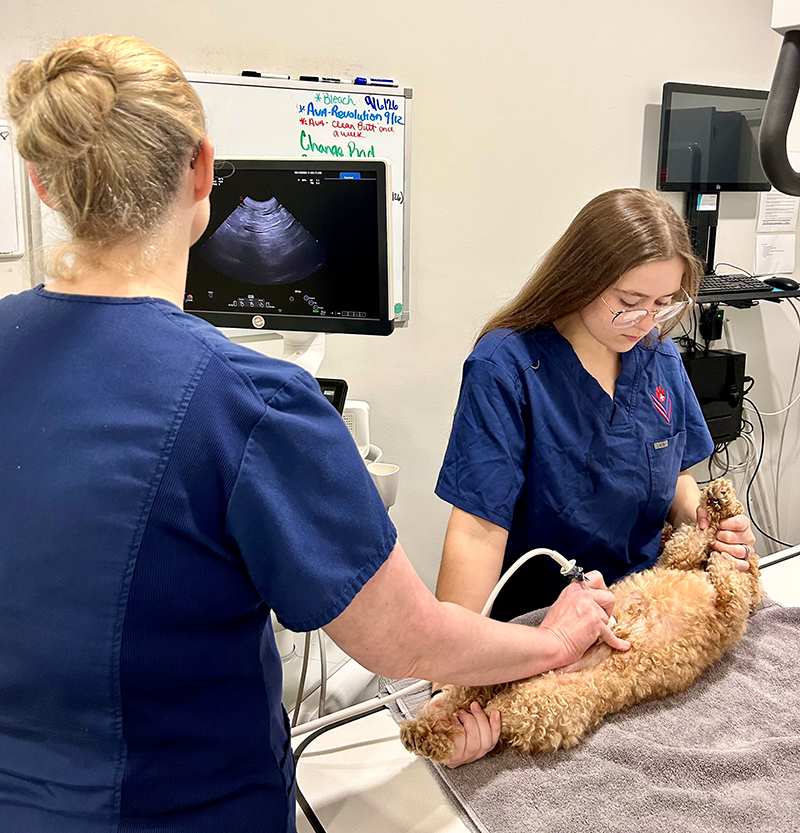
At Victory Vet, our advanced ultrasound technology allows our veterinary team to look inside your pet’s body in real time—providing valuable information that may not be visible through a physical examination or X-rays alone.
Ultrasound uses sound waves to create detailed images of soft tissues and internal organs. It is a non-invasive, radiation-free diagnostic tool that can help our veterinarians evaluate your pet’s health and identify the source of concerning symptoms.
What can ultrasound help us evaluate?
- Abdominal organs: Examine the liver, spleen, kidneys, adrenal glands, pancreas, stomach, intestines, and bladder for abnormalities.
- Digestive problems: Investigate vomiting, diarrhea, abdominal pain, loss of appetite, weight loss, or other gastrointestinal concerns.
- Urinary system: Evaluate the kidneys and bladder for abnormalities such as stones, inflammation, masses, or other changes.
- Liver and gallbladder: Look for changes in organ size, structure, or appearance that may indicate disease.
- Heart: Cardiac ultrasound, or echocardiography, can provide detailed images of the heart’s chambers, valves, and movement and can help evaluate heart function.
- Masses and abnormal growths: Ultrasound can help identify and characterize masses or enlarged organs and determine where a problem is located.
- Fluid or inflammation: It can help detect abnormal fluid within the abdomen or other changes associated with inflammation or disease.
- Reproductive health: Ultrasound can be used to evaluate the reproductive tract and monitor pregnancy in dogs and cats.
- Pregnancy monitoring: Ultrasound can help confirm pregnancy, assess fetal development, and monitor the pregnancy as it progresses.
- Guidance for procedures: Ultrasound can help our veterinarians safely guide certain needle aspirates or biopsies when a sample of tissue or fluid is needed for further testing.
Why Choose Ultrasound?
Unlike X-rays, which primarily show differences in tissue density, ultrasound allows us to see the structure and movement of soft tissues in real time. This can give our veterinary team additional information when diagnosing illness and developing an appropriate treatment plan.
Ultrasound is also non-invasive and does not use radiation. Depending on the area being examined and your pet’s individual needs, sedation may or may not be necessary. Our veterinary team will discuss what is appropriate for your pet before the procedure.
At Victory Vet, we combine advanced diagnostic technology with compassionate veterinary care to help us better understand what is happening inside your pet—and provide the most informed care possible.